It's much easier to rapidly share and spread information with social networking sites like Facebook and Twitter. The rapid advancement of social media has improved all our lives, but for all the good it has done, there is a darker side to social media - a side that has been used to do a great deal of damage and bullying.
Selena Ross of The Chronicle Herald, reported the story of Rehtaeh Parsons - a 17 year old girl on life support due to a failed suicide attempt. Parsons attempted to hang herself in the bathroom of her parents house, as a result of post-traumatic stress from being raped and bullied when she was 15 years old. After removing her from life support, her mother shared her daughter's story.
Along with her several others, 15 year old Rehtaeh went to a friends house where she was later raped by four teenage boys. Rehtaeh didn't immediately report the incident to her parents or the police until backlash from her peers ensued. Pictures of her being sexually assaulted that evening quickly circulated and soon people were harassing her for being a "slut". The investigation is still ongoing. Despite the damage it caused the Parson family, Ross also demonstrates how social media can bring people together for a cause. Ross posts videos, photos, and tweets of people sharing their disgust for society's victim-shaming in cases like these and as well as advocating for victims.
I found it compelling that Rehtaeh's mother used social media to share her daughter's tragic story. Ironic, yes, but it demonstrates how social media can effectively be used for good. It's very easy for anyone to create a profile and start spreading slander, it has made bullying that much easier and anonymous. It's important that we don't turn social media into a weapon of mass destruction.
Showing posts with label sex. Show all posts
Showing posts with label sex. Show all posts
Wednesday, May 8, 2013

Friday, May 3, 2013
Rape, Racism, and the Law - Denials and Accusations of Rape based on Race
Just as the second wave feminist disregarded the plight of
minority, working-class women, so did the law regarding rape. It’s very
unsettling to think of a time in our government when the rape of an African American
woman was legal and race was used as direct evidence for the rape of white women. Jennifer
Wriggin begins her article, Rape, Racism,
and the Law, discussing the focus on alleged black offenders and white victims of
rape; in the eye of the law, all a white woman needed to do in the late 1800s
to early 1900s was say a black man raped her and he would be convicted. Bestial
behavior has been closely associated with African Americans since the beginning
of slavery, making rape a crime assumed to be committed by African American men. In a time period when Emmett Till was brutally murdered for being
too friendly to a white woman and his white assailants were found not guilty, it wasn't surprising to discover in Wriggin’s article that all a white woman needed to do
was call fowl and the case was closed. What’s worse is that the rape
convictions for black offenders still remain much harsher when the victim is
white, oppose to vice versa.

In addition to this course, I’m also enrolled in a Race and Ethnic Relations course this semester and my professor summed up the objective of white segregationists as protecting the purity of their white women. It’s a pretty adolescent summation of white oppression, but is evident in Wriggin’s article. Taking a look at the Central Park Jogger case, Wriggin’s claims hold true. The case involved four African Americans and one Latino put on trial for allegedly raping an affluent white woman in Central Park. The five teenagers didn't commit the crime but were influenced to plead guilty which was disproved years later through DNA testing. The harsh convictions of alleged black offenders is just one side of the race issue, the race/rape issue takes an ugly turn when the alleged offender is white and the victim is black.

Twana Brawley, a fifteen year old African American, was found unconscious in a dumpster and later accused six white men of rape. Tawana’s case was highly publicized, with much controversy due to inconsistencies in the case. Whether Tawana’s accusations had holes or not ceases to be the issue at hand, the mere fact that this person’s race and the race of her attackers determined how the case was handled and how the media reported it illustrates the institutional racism that exists in the courts. If Tawana was a white teenager, the emphasis wouldn't have been on whether or not she was telling the truth, but more on her attackers – who would more than likely be assumed to be black.
With every highly publicized case of rape, comes the awful reminder of the rape culture that exists in our country. The extent to which law enforcement investigates a person’s accusation should not be determined by gender or race. Victim shaming and harsh convictions with lack of evidence are all too common and race is the underlying determinate in both instances. Wriggin’s suggest we rid the legal system of racist ideologies and look at sexual assault for what it is rather than who committed it. The belief that African American men behave like beasts and African American women are hyper-sexual does not excuse behavior or sexual assault and should not determine conviction. Sexual assault is a crime, regardless of race.
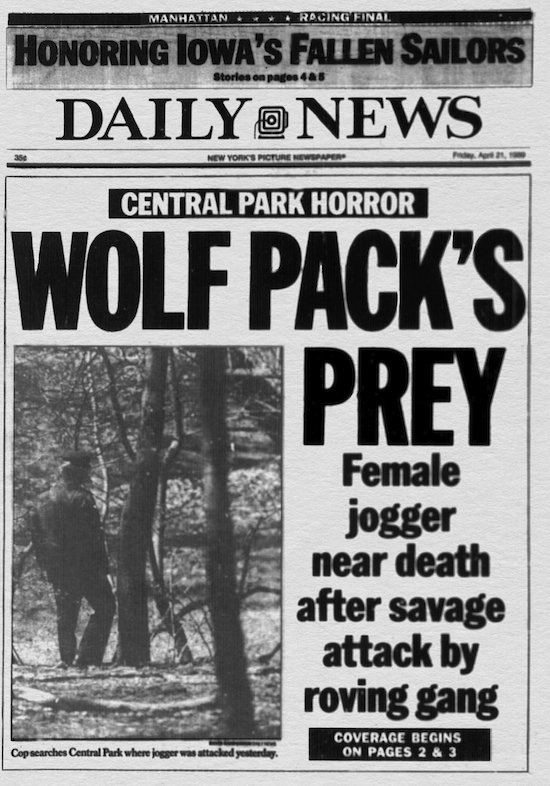
In addition to this course, I’m also enrolled in a Race and Ethnic Relations course this semester and my professor summed up the objective of white segregationists as protecting the purity of their white women. It’s a pretty adolescent summation of white oppression, but is evident in Wriggin’s article. Taking a look at the Central Park Jogger case, Wriggin’s claims hold true. The case involved four African Americans and one Latino put on trial for allegedly raping an affluent white woman in Central Park. The five teenagers didn't commit the crime but were influenced to plead guilty which was disproved years later through DNA testing. The harsh convictions of alleged black offenders is just one side of the race issue, the race/rape issue takes an ugly turn when the alleged offender is white and the victim is black.

Twana Brawley, a fifteen year old African American, was found unconscious in a dumpster and later accused six white men of rape. Tawana’s case was highly publicized, with much controversy due to inconsistencies in the case. Whether Tawana’s accusations had holes or not ceases to be the issue at hand, the mere fact that this person’s race and the race of her attackers determined how the case was handled and how the media reported it illustrates the institutional racism that exists in the courts. If Tawana was a white teenager, the emphasis wouldn't have been on whether or not she was telling the truth, but more on her attackers – who would more than likely be assumed to be black.
With every highly publicized case of rape, comes the awful reminder of the rape culture that exists in our country. The extent to which law enforcement investigates a person’s accusation should not be determined by gender or race. Victim shaming and harsh convictions with lack of evidence are all too common and race is the underlying determinate in both instances. Wriggin’s suggest we rid the legal system of racist ideologies and look at sexual assault for what it is rather than who committed it. The belief that African American men behave like beasts and African American women are hyper-sexual does not excuse behavior or sexual assault and should not determine conviction. Sexual assault is a crime, regardless of race.
Given the media coverage on recent sexual assault cases, do
you think there will ever be a time in our culture and legal system where rape
convictions won’t be founded on gender, race, and class of both victim and
offender?
Tuesday, April 23, 2013
Do We Like Christine Quinn?
Ever since Christine Quinn's mayoral candidacy was announced, I've been debating with myself whether she's someone I would vote for. I'm still undecided on the matter and it appears that I'm not the only one. Cara Giaimo's article, Christine Quinn: Because Just Being Gay Isn't Enough To Deserve the Gay Vote for Autostraddle explores the pros and cons of Christine Quinn's policies and political agenda.
What I found most interesting about Giaimo's article was her mention of the effects of the Stop and Frisk policy on the LGBT community. Very rarely is sexuality in the headlines regarding the Stop and Frisk policy, but a quick Google search led me to Arrests by the Fashion Police, a New York Times article detailing the issues trans people face with the Stop and Frisk policy in NYC. Apparently, trans people are being targeted by police and often arrested for allegedly being prostitutes. What evidence do these officers have? condoms in the pockets of those being stopped and frisked.
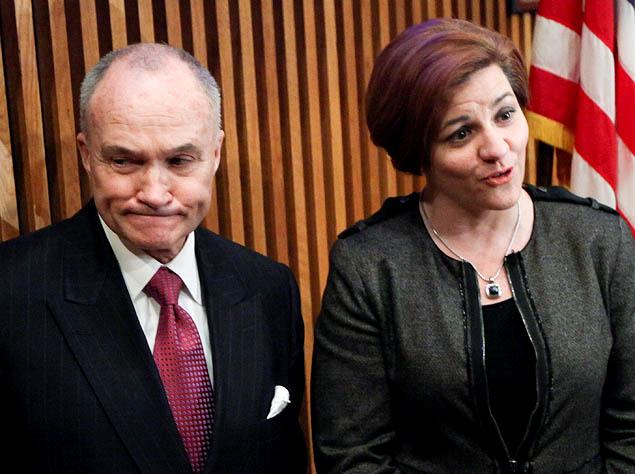
Most of Quinn's political agenda has left me on the fence; I don't entirely agree with keeping Ray Kelly on as police commissioner and her lack of support on issues that directly concern women and the LGBT community contradicts her alleged stance on those issues, often citing the timing just isn't right. Giaimo remains diplomatic, concluding her article with "Overall, politics is politics." Quinn is just one of many candidates that have contradictory political practices and in some cases even sketchy ones.
Am I going to vote for Quinn? Still too early to tell, but Giaimo's article did inspire to me to delve deep into every candidates political agenda as well as their past and current support for policy change. I guess the fact that Quinn is an out lesbian woman drew me to her and made me want to support her, but I realize it takes more than an image of a disfranchised community to earn my vote - I need action.
Go to Autostraddle to read Cara Giaimo's full article: Christine Quinn: Because Just Being Gay Isn't Enough To Deserve the Gay Vote
For more information on the Stop and Frisk LGBT discrimination, read The Village Voice's Profiled by NYPD, Transgendered People in New York Fear Carrying Condoms and the New York Times' Arrests by the Fashion Police
What I found most interesting about Giaimo's article was her mention of the effects of the Stop and Frisk policy on the LGBT community. Very rarely is sexuality in the headlines regarding the Stop and Frisk policy, but a quick Google search led me to Arrests by the Fashion Police, a New York Times article detailing the issues trans people face with the Stop and Frisk policy in NYC. Apparently, trans people are being targeted by police and often arrested for allegedly being prostitutes. What evidence do these officers have? condoms in the pockets of those being stopped and frisked.
 |
| Image from The Daily News |
Am I going to vote for Quinn? Still too early to tell, but Giaimo's article did inspire to me to delve deep into every candidates political agenda as well as their past and current support for policy change. I guess the fact that Quinn is an out lesbian woman drew me to her and made me want to support her, but I realize it takes more than an image of a disfranchised community to earn my vote - I need action.
Go to Autostraddle to read Cara Giaimo's full article: Christine Quinn: Because Just Being Gay Isn't Enough To Deserve the Gay Vote
For more information on the Stop and Frisk LGBT discrimination, read The Village Voice's Profiled by NYPD, Transgendered People in New York Fear Carrying Condoms and the New York Times' Arrests by the Fashion Police
Friday, April 19, 2013
Marry the Man Today!
There has been a lot of talk about marriage recently, particularly when women should marry. There was some
backlash when Susan Patton, dubbed "the Princeton Mom" gave her advice to young female Princeton students to find a husband on
campus, claiming it's one of the few opportunities they'll have to pick a mate
that is an intellectual equal. There has also been a some commentary on the
recent "hookup culture" and the absence of seriously defined
relationships among young adults and college students.

As long as there is a mutual understanding, no harm is being
done to either party. So why are people like Julia Shaw, in her article Marry Young, suggesting
we're wasting our time not looking for a husband? Shaw suggests
young women are waiting for security stating that "marriage doesn't require
a big bank account, a dazzling resumé, or a televised wedding—it requires
maturity, commitment, and a desire to grow up together"... that sounds
similar to most out-of-wedlock monogamous relationships, the ones attainable without a
marriage license .
Maybe it's because I don't share the same religious sentiment as others and for those
reasons, I'm in no particular rush to get married. In my
personal opinion, marriage is just a legal contract that allows partners to get a tax break and
share property as well as that beloved health insurance. I don't own
property, I'm covered under my parents health insurance for a
few more years (thanks ObamaCare!), and I already get a break from being a
down-and-out college student with a menial job.
 So what's all the hullabaloo about rushing to get
married or even finding a life partner in your twenties? Some, like the Princeton Mom, claim that college, surrounded by intellectual equals, is
the prime time to snatch up a husband. She may have a point, if intelligent men
is your bag, than an ivy league college is a treasure trove. I once had a
professor jokingly suggest that if your looking for a man who is smart and
makes good money, become a physicist - her reasoning being barely any
women are in the field and you can have your pick of anyone of them. There are
a lot of "sad, but true" points being made by both my professor and
the Princeton Mom. There aren't enough women working in the sciences, rarely are they put into a position where they have access to intellectual equals. Most people rely on friends of friends as well and school and
job circles to meet eligible partners, hence contemporary dating sites like Coffee
Meets Bagel.
So what's all the hullabaloo about rushing to get
married or even finding a life partner in your twenties? Some, like the Princeton Mom, claim that college, surrounded by intellectual equals, is
the prime time to snatch up a husband. She may have a point, if intelligent men
is your bag, than an ivy league college is a treasure trove. I once had a
professor jokingly suggest that if your looking for a man who is smart and
makes good money, become a physicist - her reasoning being barely any
women are in the field and you can have your pick of anyone of them. There are
a lot of "sad, but true" points being made by both my professor and
the Princeton Mom. There aren't enough women working in the sciences, rarely are they put into a position where they have access to intellectual equals. Most people rely on friends of friends as well and school and
job circles to meet eligible partners, hence contemporary dating sites like Coffee
Meets Bagel.
I am totally fine with living in sin with my significant other until marriage is something I can benefit more from. I am, however, a traditionalist in the sense that I would prefer to be married before having a child. Am I going to preach that all women should wait to get married before having children? No, so this pressure for me to bite the bullet and get hitched is not appreciated. I am confident that I can be in a mature, committed relationship without a piece of paper legally defining it. Not to mention all this hetero-normative talk about women finding husbands completely disregards the LGBTQ community entirely. Perhaps the push for women to marry should be redirected to a different cause, like... marriage equality!
Tracy Moore says it best in her article for Jezebel, "Please Stop Telling Us When to Get Married" Stop
suggesting we're husks of women, void of emotions because we're conforming to
these physical relationships that will have us doomed to a life of
spinsterdom. Stop making young women feel bad about not conforming to Princeton Mom and Julia Shaw's ideals! Marry when you want! Date who you want! And sleep with whoever you want (just use protection)!
 |
| Image from Jezebel.com |
More commentary on "the hook-up culture" can be found on Nerve and The Atlantic
Follow the links for Amanda Marcotte's article on the Princeton Mom and Julia Shaw's article Marry Young as well as Tracy Moore's response to both articles on Jezebel
Follow the links for Amanda Marcotte's article on the Princeton Mom and Julia Shaw's article Marry Young as well as Tracy Moore's response to both articles on Jezebel
Monday, April 8, 2013
Emergency Contraception Age Restriction Lifted
From New York Times article Judge Strikes Down Age Limits on Morning-After Pill
On Friday, Judge Edward R. Korman of the Eastern District of New York ruled that the prescription requirement for females 16 years and younger trying to acquire emergency contraception pills, like Plan B, is not scientifically necessary. Judge Korman ruled the prescription requirement was "arbitrary, capricious and unreasonable."
The EC pill is often clumped together with abortion, though the two could not be anymore different. The EC pill is NOT an abortion pill, it is a form of birth control. The EC pill stops the ovaries from releasing an egg so that the sperm and egg cannot join, therefore pregnancy does not occur. It is intended to be taken up to five days after unprotected sex has occurred - the sooner, the better.
This is obviously a very controversial issue and a bold move on Judge Korman's part to nullify the age restriction. Many conservative groups are up in arms about the now easily accessible EC pill, their arguments involving health concerns for younger girls and whether or not the EC pill is an abortion pill (it's not).
I personally think this is a huge step forward for reproductive health. I remember having to go to the pharmacy for a friend in need of the EC pill (the condom had broke, that actually happens!) who was unable to purchase it because she wasn't quite old enough yet. Age restrictions make sense for hazardous products like tobacco and alcohol, not for a product that could safeguard someone from getting pregnant. Now that the prescription requirement has been lifted for young females, it's time for the government and health officials to work towards making birth control affordable and/or, dare I say it, free!
On Friday, Judge Edward R. Korman of the Eastern District of New York ruled that the prescription requirement for females 16 years and younger trying to acquire emergency contraception pills, like Plan B, is not scientifically necessary. Judge Korman ruled the prescription requirement was "arbitrary, capricious and unreasonable."
The EC pill is often clumped together with abortion, though the two could not be anymore different. The EC pill is NOT an abortion pill, it is a form of birth control. The EC pill stops the ovaries from releasing an egg so that the sperm and egg cannot join, therefore pregnancy does not occur. It is intended to be taken up to five days after unprotected sex has occurred - the sooner, the better.
This is obviously a very controversial issue and a bold move on Judge Korman's part to nullify the age restriction. Many conservative groups are up in arms about the now easily accessible EC pill, their arguments involving health concerns for younger girls and whether or not the EC pill is an abortion pill (it's not).
I personally think this is a huge step forward for reproductive health. I remember having to go to the pharmacy for a friend in need of the EC pill (the condom had broke, that actually happens!) who was unable to purchase it because she wasn't quite old enough yet. Age restrictions make sense for hazardous products like tobacco and alcohol, not for a product that could safeguard someone from getting pregnant. Now that the prescription requirement has been lifted for young females, it's time for the government and health officials to work towards making birth control affordable and/or, dare I say it, free!
Subscribe to:
Posts (Atom)